
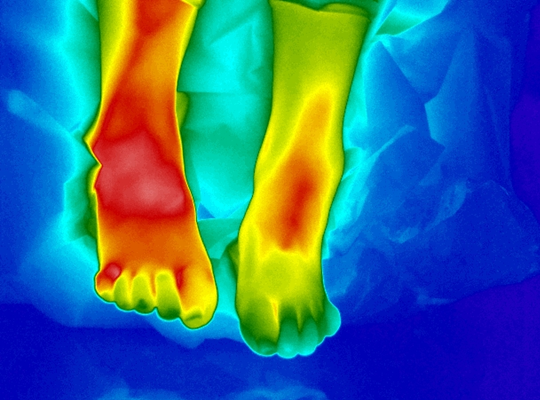
Charcot neuro-osteoarthropathy (CNO) is a serious, often under-recognised complication of diabetes that can lead to irreversible foot deformity, ulceration, and even amputation. One of the biggest challenges in managing CNO is that it frequently develops without pain, due to peripheral neuropathy. Patients often don’t realise damage is occurring, which delays diagnosis and makes education around offloading and self-care more difficult.
A recent clinical case series published in The Diabetic Foot Journal explores an innovative approach: using a Thermidas IRT-384 thermal imaging tablet to help patients visualise inflammation they cannot physically feel.
This technique gave clinicians a new way to engage patients in conversations about their condition. By showing thermal asymmetries between limbs, patients were better able to understand the impact of continued weight-bearing and were more receptive to offloading and behaviour change. The visual evidence sparked more meaningful dialogue, improved patient adherence to pressure-relieving strategies, and even led to improved glycaemic control in some cases.
The study highlights thermography not just as a diagnostic support tool, but as a catalyst for behavioural change. It can be an effective way to help patients “see the unseen” and take ownership of their condition. It’s a reminder that when patients truly understand what’s happening in their bodies, they are more likely to participate in solutions.
