
Evidence
Backed by published research
Thermography in musculoskeletal care isn't experimental. It has a growing body of peer-reviewed evidence behind it, across injury prevention, rehabilitation monitoring and tissue-damage markers.
60% fewer injuries
When a Spanish LaLiga club added a thermography-based prevention protocol to preseason, injuries fell from 15 to 6 and days lost from 156 to 14 against the previous conventional preseason.
80% asymptomatic
In screening of Olympic-level swimmers, 80% showed thermal asymmetries despite reporting no symptoms, prompting targeted physiotherapy before problems escalated into injuries.
1 °C threshold
A side-to-side difference above 1 °C was found to indicate a pathophysiological process. In a documented Achilles tendinopathy case the asymmetry fell from 1.6 °C to 0.6 °C over 8.5 weeks of rehab.
Tracks tissue damage
Post-training temperature rises in footballers' quadriceps correlated with creatine kinase, a validated blood marker of muscle damage, with the added advantage of showing where the damage is.
Where it fits
A second set of eyes on soft tissue
Musculoskeletal disorders, soft-tissue injury, overuse, post-operative recovery and chronic pain all involve inflammation, circulatory change or autonomic response - physiological processes that show at the skin.
Thermography is non-contact and takes seconds, so it sits inside your existing assessment rather than replacing any part of it. Read alongside your clinical reasoning, it adds an objective layer you can follow over time.
01
Estimating training load
Track temperature change across a training block and manage load before overuse becomes injury.
02
Monitoring rehabilitation
Compare a client against their own earlier images to see whether the treatment and the programme are working.
03
Fitting assistive devices
Assess objectively whether an orthosis, prosthesis or aid actually suits the individual and where it loads.
Real football players - real injuries
Two cases where the image changed the next decision
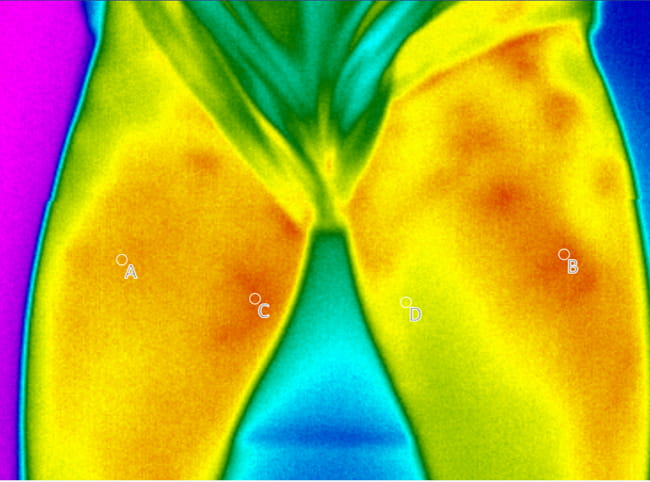
Hamstring injury
Professional footballer, injured during a game; dry needling the following day.
Thermal images taken two days after the injury.The right leg read 2 °C colder than the left — a doctor's consult was recommended.
A hamstring injury was diagnosed the next day.
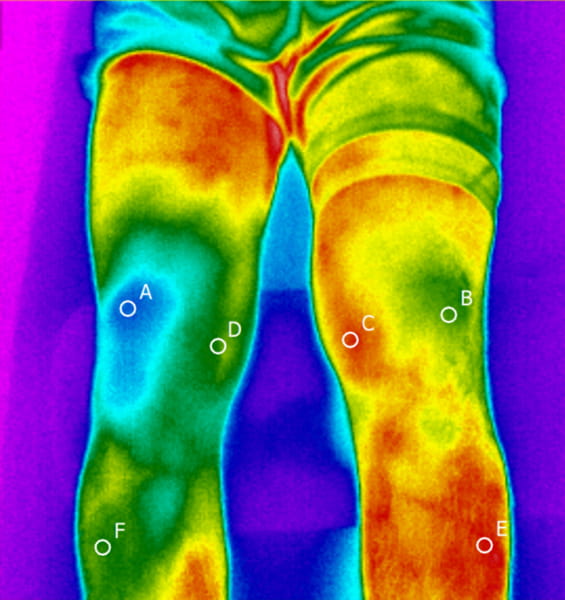
Fresh ACL injury
Top-level footballer, in considerable pain.
The client could not activate vastus medialis during a wall-sit test.
Considerable temperature differences confirmed the client's account and supported the treatment path chosen.
Already in use at



Everyday caseload
Not just for athletes
Most physiotherapy caseloads aren't elite footballers. They're post-op knees, back pain, osteoarthritis and older adults. Thermal imaging supports the everyday work of a clinic just as directly.
Osteoarthritis
Knee OA produces measurable thermal patterns, and thermography captures how the joint responds to exercise. An objective way to monitor flare-ups and exercise tolerance.
Post-operative and fracture recovery
Thermal imaging has been used to follow bone healing over months, flagging interrupted repair and detecting infection through temperature rise.
Orthotics and prosthetics
Temperature mapping locates pressure and friction hotspots at the device–skin interface, supporting objective fitting decisions.
Client case
Proxima Finland images athletes as part of the normal session
Based in Tampere and Hämeenkyro, Proxima Finland offers comprehensive physiotherapy and massage services to its clients. Proxima Finland's Arttu Peltola and Jesse Asikainen use Thermidas thermal imaging in their daily work to support rehabilitation and monitor the load of athletes.
Training load
Strength training shows almost no immediate change at the skin, then a marked rise around eight hours later.
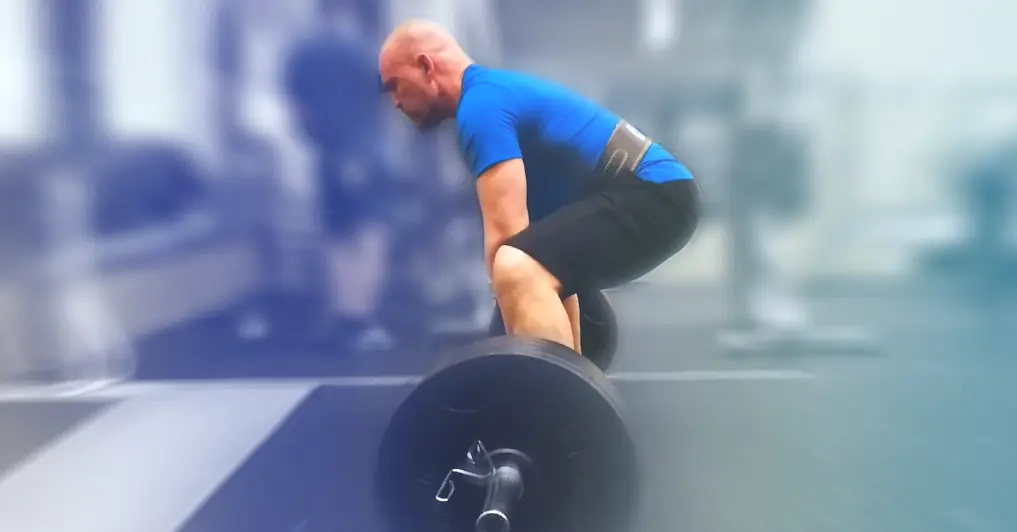
The thermal effects of different forms of exercise are well studied which means the timing of a capture matters as much as the image itself. Worked example: how thermal imaging pinpointed the muscle imbalance behind an athlete's deadlift performance.
Recommended solution
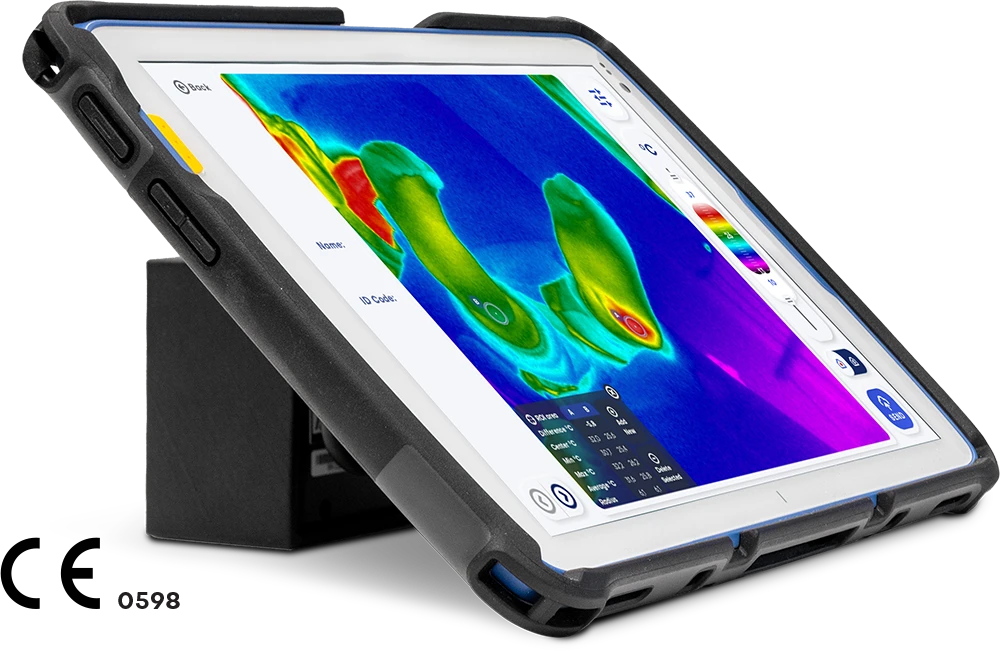
Thermidas IRT-384 Tablet
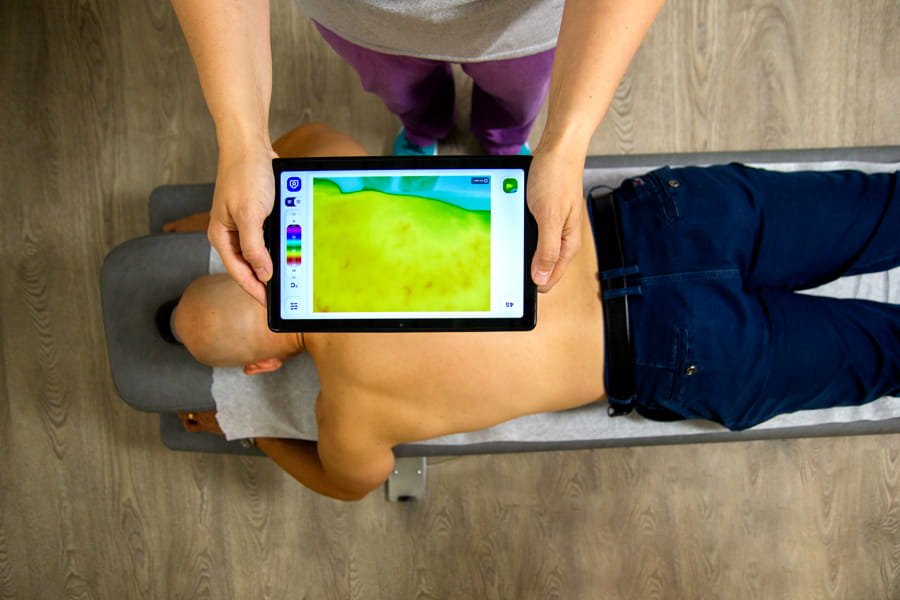
The IRT-384 Tablet is a high-quality thermal imaging solution for locating problem areas and monitoring the effectiveness of treatment.
Thermal imaging also supports the client’s understanding of rehabilitation progress by providing clear, objective information on the effects of treatment.
Get started
Ready to set the standard?
From estimating training load to monitoring rehabilitation and almost everything in between, thermal imaging can become your new favorite tool for objective measurement.
You can also email or call us:
info@thermidas.fi
+358 20 794 0961
