
Thermal imaging reveals hidden load asymmetries in a Finnish floorball player
Prevention is more effective than treatment — but acting before a problem becomes visible requires the right tools. This case study from Proxima Finland, a physiotherapy clinic in Tampere, illustrates how thermal imaging can uncover the kind of subtle asymmetries that often precede overuse injuries.
You can read the entire case in Finnish by visiting https://proximafinland.fi/case-joona-rantala/
Background
Joona Rantala, a competitive floorball player, sustained an ankle sprain in the spring playoffs of the 2023–24 season. He recovered well and returned to full play in subsequent seasons. During the 2025–26 season, Proxima Finland carried out a proactive assessment using Thermidas thermal imaging combined with muscle balance testing and movement analysis — not because Joona was injured, but precisely because he wasn’t.
The goal was to map any load asymmetries between limbs before they had a chance to become a problem.
What the thermal images revealed
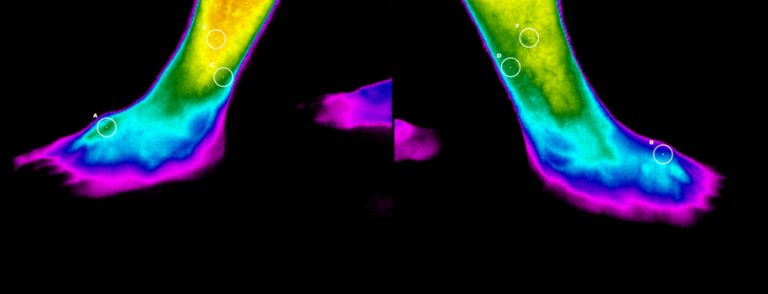
Thermal imaging captures surface temperature differences across the body, which reflect uneven loading, tissue stress, and the lingering effects of previous injuries. In Joona’s case, several findings stood out:
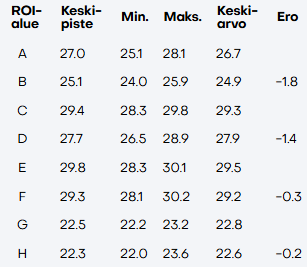
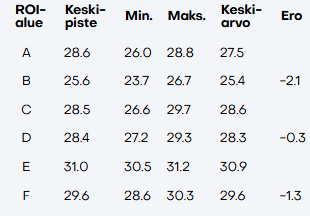
- The area around the inner ankle on his previously injured right leg was 1.8°C warmer than the corresponding point on the left — a clinically meaningful asymmetry that suggests the right ankle is still being loaded differently.
- The front of the left shin showed a 1.3–1.4°C temperature difference compared to the right, with similar patterns further down the lower leg.
- Temperature differences were also visible across the forefoot and metatarsal region.

Confirming the findings: strength and movement analysis
Muscle balance testing and video movement analysis were used alongside the thermal data to build a complete picture. The assessments confirmed what the thermal images suggested:
- Toe raises showed the right ankle locking less effectively than the left, with the centre of pressure shifting to the outer edge.
- Drop jumps revealed that the right knee was tracking inward more than the left, with increased pronation at the foot — a pattern consistent with compensatory movement following an ankle sprain.
- Hip and core stability showed room for improvement, particularly on the right side.
Confirming the findings: strength and movement analysis
Why this matters
The value of this kind of assessment lies in its timing. Thermal imaging takes 3–10 minutes per athlete and can be done as a routine baseline during a season — not just when something hurts. Temperature asymmetries like the ones found in Joona’s case may be invisible to standard clinical observation, yet they can indicate how the body is quietly compensating in the wake of a past injury.
The Thermidas thermal imaging system has been used with Nokia KrP’s F-League squad and in international competition settings, including the Australian men’s floorball World Championship qualifier.
Case by Arttu Peltola, Proxima Finland. Learn more at proximafinland.fi
