
When acute testicular pain brings a patient to the emergency room, there are only a few hours to act. Yet diagnosis can be significantly delayed. A Finnish study is now testing technology that could bring decision-making to where it matters most – in a matter of minutes.
It is 3:00 a.m. A young man arrives at the emergency room with severe testicular pain. If it is a testicular torsion, time is of the essence.
Blood flow must be restored quickly, in practice, within a few hours. Every delay increases the risk of permanent damage. Yet the diagnosis isn’t always quick.
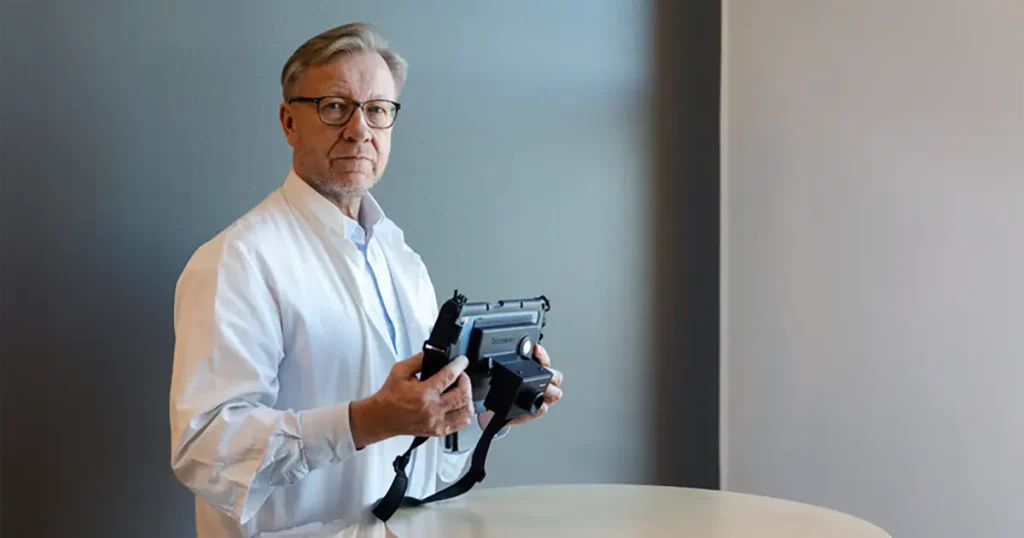
Finnish researchers are now seeking a solution to this global problem, focusing on the thermal imaging technology developed by Thermidas.
A six hour window
In medicine, there is a concept known as the “Golden Hour.” It refers to the critical time window within which treatment must begin in order to save the patient or minimize permanent damage.
In testicular torsion, this window is approximately six hours. After that, the risk of testicular loss increases rapidly.
Currently, diagnosis is often based on ultrasound. It is an effective method, but in practice it depends on the availability of a specialist – even in the middle of the night.
“It is a slow and operator-dependent process that, at worst, jeopardizes the patient’s testicular blood flow due to the wait,” notes Mika Raitanen, a specialist in surgery and urology at Seinäjoki Central Hospital and an associate professor at the University of Tampere.
It is precisely the waiting that is the problem. The patient is already in the emergency room, but a definitive diagnosis takes time.
Diagnosis in seconds
In late 2023, a pilot study led by Mika Raitanen was conducted at Seinäjoki Central Hospital to test Thermidas’s thermal imaging system for the diagnosis of acute testicular pain.
The results were significant: testicular torsion was identified using a thermal camera for the first time in the world.
The principle of thermal imaging is simple.
A thermal camera displays both testicles in the same image and immediately reveals the temperature difference between them. If blood flow is impaired, the tissue cools down. In the case of inflammation, however, the temperature rises.
“The challenge with the current examination method—ultrasound—is that the more experienced the doctor, the more accurate the result. Thermal imaging, on the other hand, is a logical and easy method that any healthcare professional can master with a short training session,” Raitanen explains.
The examination is quick, and the device does not touch the patient at all.
“An ultrasound may feel uncomfortable for the patient, but with thermal imaging, the device doesn’t even need to touch the skin. The speed of the procedure means that the patient can go straight into surgery if testicular torsion is suspected. The human cost is high if a young man loses a testicle simply because of the wait,” Raitanen sums up.
Treatment decision without delay
A larger study led by Raitanen is currently underway, aiming to confirm the results of the pilot. All of Finland’s university hospitals are participating, as well as the largest regional hospitals in Seinäjoki, Jyväskylä, and Pori.
If the results hold up, the impact could be significant.
“If the study demonstrates the reliability of thermal imaging in such a large dataset, the care pathway could evolve so that a patient suffering from acute testicular pain first undergoes thermal imaging, and if the painful side is cooler than the asymptomatic side, the patient is referred for surgical treatment without further testing,” Raitanen envisions.
In practice, this would mean less waiting, fewer additional tests, and faster access to treatment.
Speed is also a matter of resources
The pressure to cut costs in healthcare is enormous.
That is why any method that reduces doctors’ working hours, shortens treatment times, and eliminates unnecessary procedures is valuable.
Frida Samuelsson, a thermal imaging specialist at Thermidas, is responsible for system training in the study and sees the change as tangible.
When time and doctors are in short supply, every accelerated examination has a direct impact on care.
“Our goal is to demonstrate the effectiveness of the method and technology, and thereby bring a new and cost-effective tool to the field of emergency care—one that can save the healthcare system money directly and get patients into treatment faster. No one loses out here,” Samuelsson notes
It all comes down to time
Technology and research open up new possibilities, but in a hospital, time is often of the essence.
“The human cost is high if a young man loses his testicles simply because we didn’t have a faster way to know. If this technology gives us those missing minutes, then the research we’ve done has made a difference,” Raitanen concludes.
